Biography

Ludovic Duprez
Ludovic Duprez

Ludovic Duprez is a French artist who lives and works in Portugal. He grew up on the Normandy coast, at the edge of shoreline and bocage, and developed early on a relationship to the living world that escapes romantic contemplation and becomes matter for thought. Trained in Industrial Design, Applied Mechanics and then Fine Arts, he acquired a double grammar — that of the engineer and that of the painter — which he never stops making converse. Two nomadic decades between London, New York, Paris and Berlin followed, moving through construction trades and visual arts without ever settling, accumulating through practice a heterogeneous formal vocabulary that would infuse all of his later work.

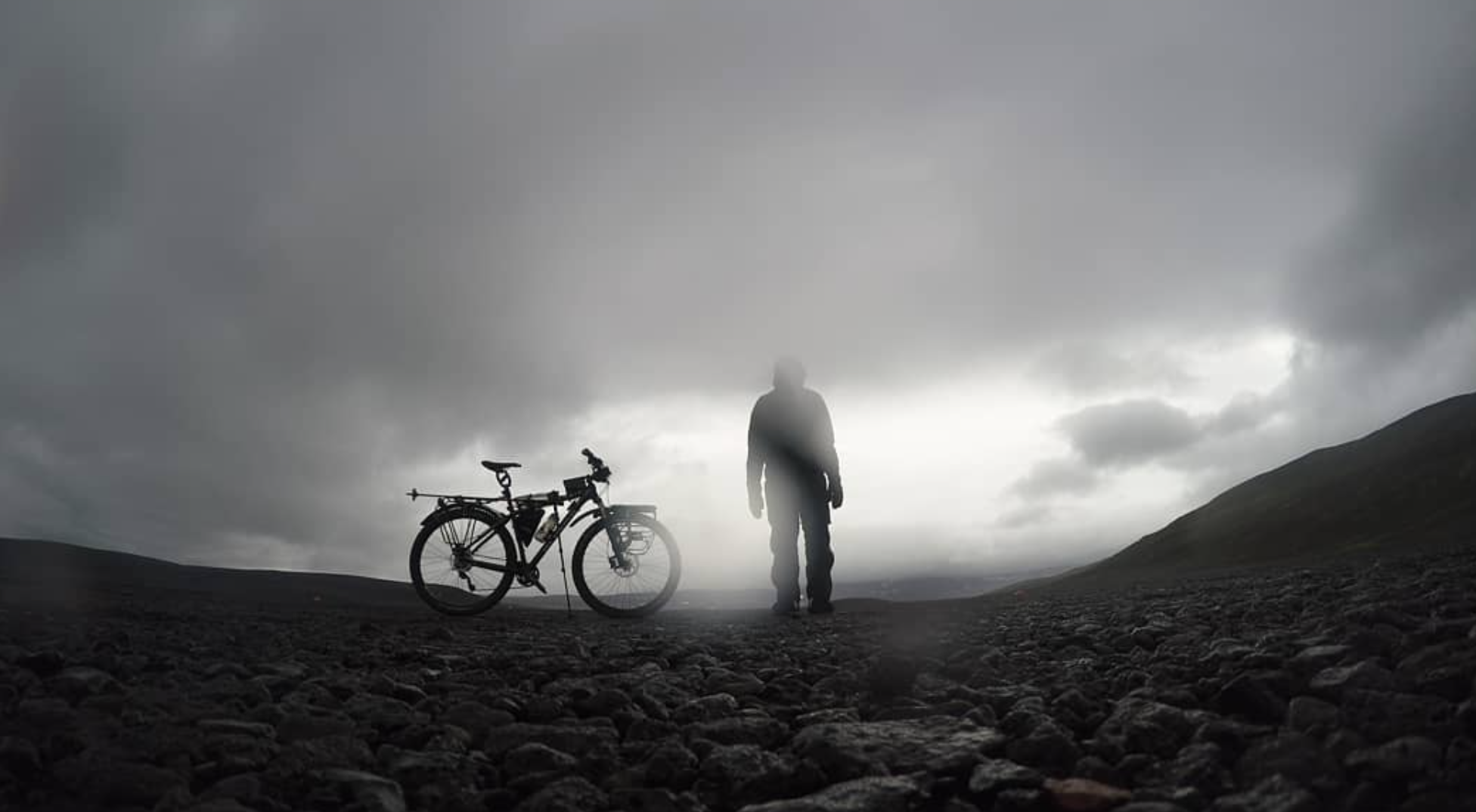
In 2016, a solo bicycle crossing of the Icelandic desert gave rise to Stone Iceland, shown in Berlin: the first gesture of an artist for whom the physical ordeal of the landscape precedes and founds the image. Settled in Portugal since 2019 near Sesimbra, in the Arrábida natural park, he has since devoted himself to painting, drawing and sculpture.

His graphite drawings, of an almost scientific precision, bring forth sketches of composite architectures, with a heterogeneous, technical and expressive style. These are not illustrative utopias but objects of thought — speculative propositions on the forms a civilisation might take if it had stopped treating the living and the machine as foreign orders. In this, his approach belongs as much to ecological speculation as to art history: heir to visionary architectural utopias, it turns them against their own modernism to interrogate, with quiet irony, the social and environmental dead-ends of the 21st century.

He has exhibited at Studio Chérie in Berlin, at Galeria Ojo (Lisbon), at Grémio (Sesimbra), at the Gaia Biennial (Porto) and at 100Ecs (Paris) in February 2026. On the occasion of his exhibition Solarpunked at La Buvette du Climat in Paris, from September 17 to October 18, he places his work in dialogue with the solarpunk movement, whose manifesto aligns particularly well with his biophilic ethics — less a style than a philosophical hypothesis on the possible reconciliation between technique and biosphere. Duprez renounces any binary opposition between nature and artifice. With his drawing series Aldeia 21, he pushes this hybrid cosmogony further — village-organisms where human dwelling, once again permeable to the plant and animal realms, sketches the lineaments of a reconciled 21st century.

On the work

Making with the World

Sketches of composite architectures, with a heterogeneous, technical and expressive style.

Duprez's work does not resolve the tension between nature and technique — it lodges it, literally, in the same structure. Greenhouse and mangrove, solar panel and seashell: the assembly does not claim to reconcile these orders, it makes them cohabit.

The companion species rather than the sovereign one.

What these drawn architectures stage is not an augmented human, master of a domesticated environment, but a figure diminished in sovereignty and augmented in attention — one who repairs, maintains, cohabits.

Reuse as a speculative gesture.

Many elements are picked, recombined, diverted. This bricolage is a philosophical proposition — the idea that a desirable future is also recomposed from the ruins and remains already here.

A post-heroic iconography.

Neither technological triumph nor naïve pastoral: these drawings renounce the grand narrative of progress as well as that of catastrophe. They propose a minor, almost domestic iconography of care.

Precision as an ethic.

The precision of the line is not a virtuoso exercise: it is the expression of attention paid to each element of the living and the built — the conviction that no habitable future can be thought globally, but always at the level of the detail one respects.

StudioStudioStudio